
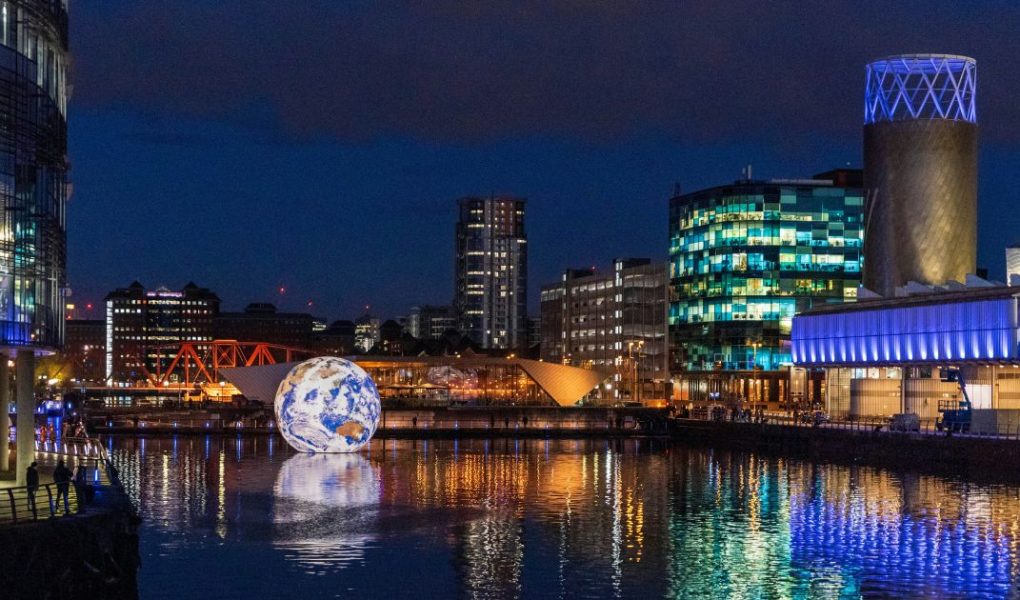

Salford Quays. Credit: Jason Jeandron

Exploring Manchester’s theatre scene: Culture built from the ground up

When you think of theatre in the UK, London’s West End is often the first reference point. But look beyond that familiar narrative, and Manchester emerges as a cultural hub with its own depth, confidence, and creative infrastructure. Manchester is a city where history and modernity coexist onstage and off, where local talent thrives alongside international touring productions, and where creative education continuously feeds the city’s artistic pulse. 

Rather than positioning itself as an alternative to London, Manchester increasingly stands on its own terms. Its theatre scene reflects the city’s wider transformation – outward-facing, fast-moving, and rooted in lived experience.

Manchester’s growing appeal is well documented, both among travellers and those choosing to relocate. As a Mancunian, I’ve witnessed this shift firsthand. Many people (including most of my peers) who now live and work in the city have arrived from elsewhere in the UK and Ireland, drawn by affordability, cultural depth, and a strong sense of place. Manchester offers the buzz of a major city without some of the barriers that often accompany life in the capital.

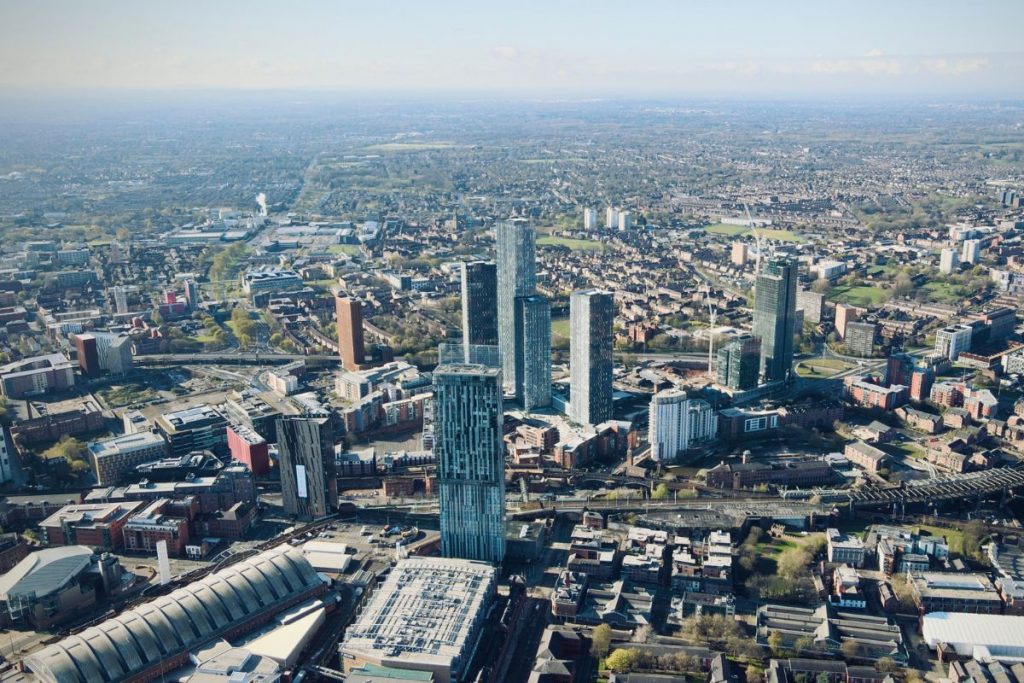
Manchester's skyline

This growth is visible. New homes, flats, and buildings continue to reshape the skyline, while it’s rare to visit without discovering a newly opened cafe, bar, or restaurant. According to the Manchester Evening News, more than 10,000 Londoners relocated to Manchester in 2018 alone. This was before developments like Aviva Studios (2023) and Co-op Live (2024) had opened their doors, and before the cost-of-living crisis sharpened conversations around affordability. Despite ongoing development, Manchester remains significantly cheaper than London, reinforcing its appeal.

In 2025, the population of Manchester and Greater Manchester reached approximately 2.83 million, reflecting an annual growth of over 20,000 people. In this context, the city feels uniquely positioned as a destination for theatre beyond the traditional Broadway and West End circuits. Its stages are not a shadow of somewhere else, but part of a cultural heartbeat well worth exploring. 

A stage for every story

Manchester’s theatre landscape is notably varied, encompassing grand historic venues, architecturally distinctive spaces, and an active fringe scene.

At the heart of the city’s theatrical heritage are the Palace Theatre Manchester and the Manchester Opera House – winners of the ‘Leading Arts and Culture Venue’ award at the 2025 This Is Manchester Awards. These are the bigger players in Manchester theatre, and the names that most visitors will recognise through platforms like ATG Tickets for major touring productions.

For a more intimate night out, the Royal Exchange Theatre offers an experience that’s surprisingly hard to find elsewhere, even in London. Set inside a former cotton exchange, the building itself is reason enough to visit. Its in-the-round seating creates an immersive atmosphere that pulls the audience into the heart of the action, comparable to venues such as the Octagon Theatre in Bolton. The result is a space that gently blurs the boundary between performer and spectator, and one that remains one of Manchester’s proudest cultural cornerstones.

Credit: Royal Exchange Theatre

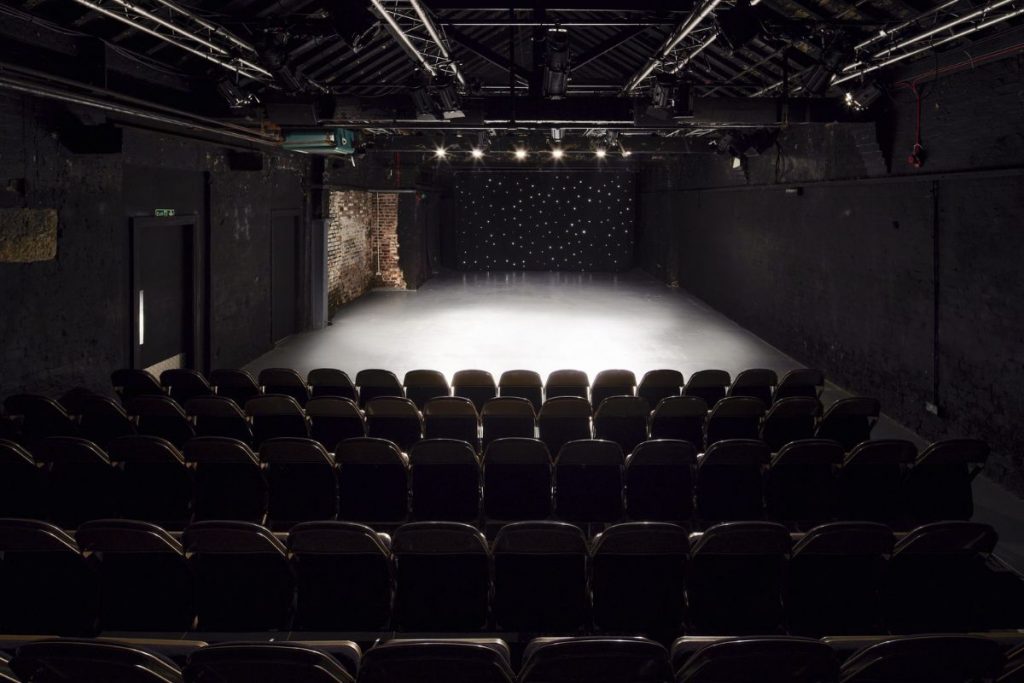
Dig a little deeper, and you’ll discover some of the city’s most exciting and intimate settings, where up-and-coming productions and fringe-festival successes take centre stage. Venues such as Hope Mill Theatre and 53two are particularly popular, with 53two focusing heavily on new writing and emerging voices.

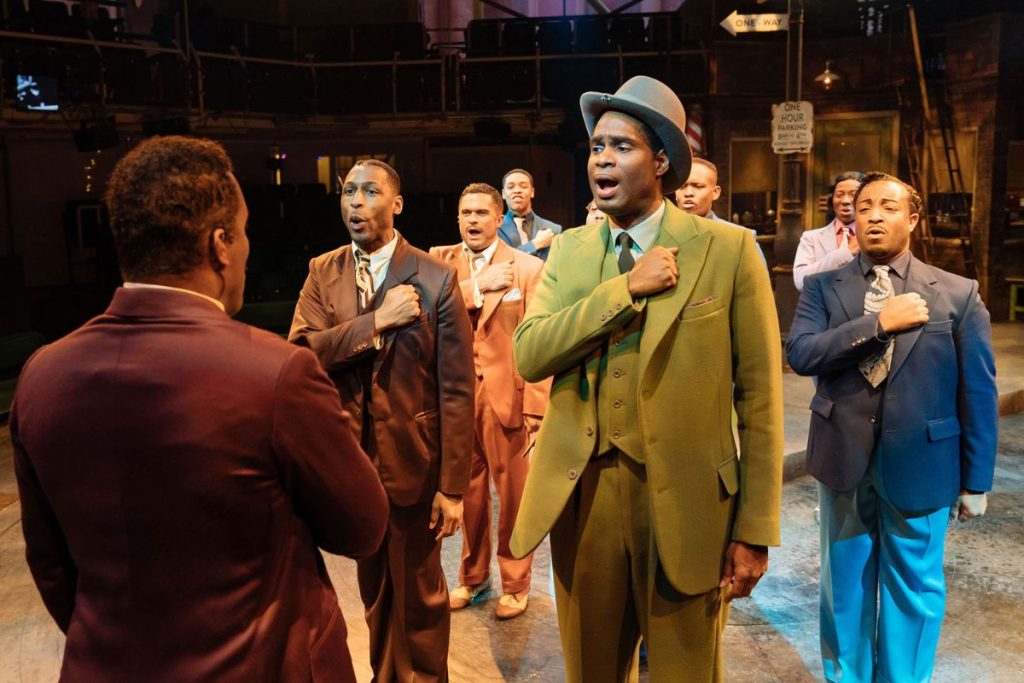
I also visited Hope Mill Theatre earlier in 2025 to see the powerful one-man play, A Manchester Anthem, starring Tom Claxton as Tommy. In a space this size, every moment feels heightened. You’re not just watching talent, you’re surrounded by it. These are the venues where creativity feels closest and most immediate, and where Manchester’s artistic future is clearly taking shape.

Credit: Hope Mill Theatre

And right at the centre of Manchester’s contemporary arts scene sits HOME Manchester, a venue that reflects the city’s creative confidence, and a place that personally makes me feel deeply connected to who Manchester is and the extraordinary talent it continues to produce. Visitors to HOME can expect performances that feel relevant and immediate, thoughtfully crafted rather than polished for mass appeal. It’s a reminder that Manchester’s cultural strength isn’t found only in its grand theatres, but in the spaces that nurture ideas, voices, and what comes next.

Taken together, these venues represent only part of the picture. Beyond the city centre, spaces such as The Lowry further extend Greater Manchester’s cultural reach, reinforcing the idea that theatre here exists as a connected regional network rather than a single destination.

Creativity in training

What truly strengthens Manchester’s cultural appeal isn’t just the number of theatres, but the creative pipeline feeding them. With institutions such as Performers College Manchester, the Royal Northern College of Music, and the Manchester Metropolitan School of Theatre, the city attracts aspiring performers, musicians, and theatre-makers from across the UK and beyond.

Credit: Performers College


For visitors, this translates into a cultural scene that feels alive and constantly evolving. Student-led performances, low-cost previews, experimental productions, and one-off collaborations regularly appear across smaller venues, fringe theatres, and multi-use arts spaces. It means that visitors aren’t limited to big-name touring shows, but can stumble upon intimate performances that feel rooted in the city itself – especially during celebrations like Greater Manchester Fringe 2026.

Rather than culture being something to book months in advance, Manchester offers moments of discovery. Pop-up shows, emerging talent, and community-led productions add texture to the city’s evenings, giving it a creative energy that feels immediate and unscripted. In this way, Manchester doesn’t mirror London’s scale, but offers something different – filled with character and accessibility.

Community theatre and grassroots performances

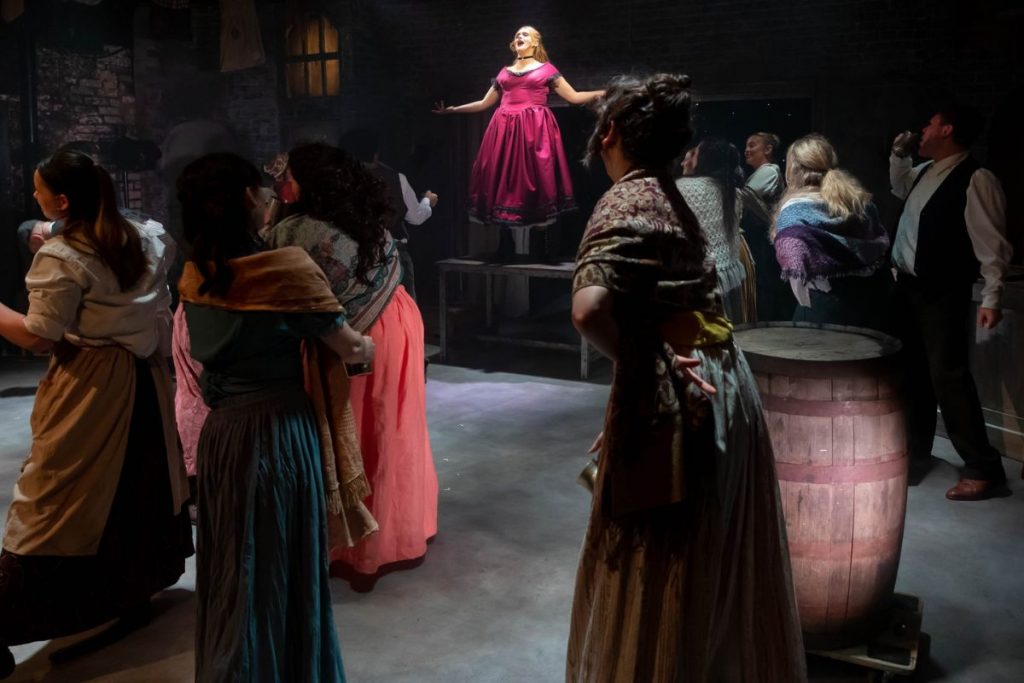
A thriving community and grassroots theatre network sits in and around Manchester, adding another layer to the city’s cultural identity. What gives community theatre here its edge is a strong sense of place. Many productions draw directly on Manchester’s music heritage, industrial history and diverse communities, resulting in work that feels unmistakably Mancunian rather than easily transferable from elsewhere.

Credit: Hope Mill Theatre - Amateur Dramatic Company

Even performances that aren’t explicitly about Manchester often have a story rooted in the city. Whether it’s a youth group building confidence and creative skills, or a community company fundraising to stage a show alongside full-time jobs, these spaces foster genuine connections among performers, audiences, and the city itself. From small-scale performances at venues such as HOME and 53two to pop-up shows and fringe festivals, community theatre in Manchester remains highly visible and accessible, offering audiences a closer relationship with both performers and place. 

Reflecting on theatre in Manchester

Exploring Manchester through its theatres offers a way of understanding the city that goes beyond landmarks or headlines. Its stages reflect the people who live here, the histories that shaped it, and the creative confidence that continues to define it. From major touring productions to fringe performances, and from training institutions to community-led work, theatre in Manchester feels woven into everyday life rather than set apart from it.

For visitors, that creates something genuinely special. Evenings invite curiosity, spaces feel welcoming rather than exclusive, and performances often linger long after the curtain falls. Just as memorable, though, is the time spent in the city itself, shaped by chance discoveries, shared experiences, and a strong sense of place. Manchester’s theatre scene isn’t something to compare to the West End – it’s making a name for itself on its own terms, quietly and confidently.

It’s something to experience, one story, one stage, and one visit at a time.

Subscribe to Magenta Adventures

Sign up to receive email updates when we post new content. We really appreciate it!

We promise we don’t spam!

Kelsey Haslam

Kelsey Haslam is the founding editor of Magenta Adventures Travel Publication and a freelance travel writer with a focus on community-based travel, culture-led experiences, and theatre tourism. She is passionate about spotlighting lesser-known destinations and connecting travellers with meaningful, human-centred stories.

Her published work includes destination features and luxury hotel reviews for leading travel outlets such as A Luxury Travel Blog, Beau Monde Traveler, and Luxury Lifestyle Magazine.

Explore more about Kelsey’s background on the About Page.

You may also like...