Manchester’s Palace Theatre carried a very different kind of energy for the UK premiere tour of The Karate Kid: The Musical. Children wandered through the main foyer, wearing hachimaki headbands, while their parents introduced them to a story they had grown up with.
For someone like me, who isn’t deeply attached to the original 1984 film, it was easy to understand why this story has lasted as long as it has. The show doesn’t just lean into the 1980s energy; it jumps straight into it.
Dramatic dojo stare-downs, exaggerated rivalries, and motivational moments delivered with absolute sincerity – the musical adaptation commits to it wholeheartedly. Trying to modernise it too heavily would potentially strip away half the fun, so instead, the show wisely embraces the nostalgia of it all.
The show doesn’t just lean into the 1980s energy – it jumps straight into it.
Contents
ToggleRage versus balance
For all its campy energy and larger-than-life karate rivalries, Karate Kid quietly revolves around one simple idea, which is still incredibly relevant today: being hateful rarely ends well.
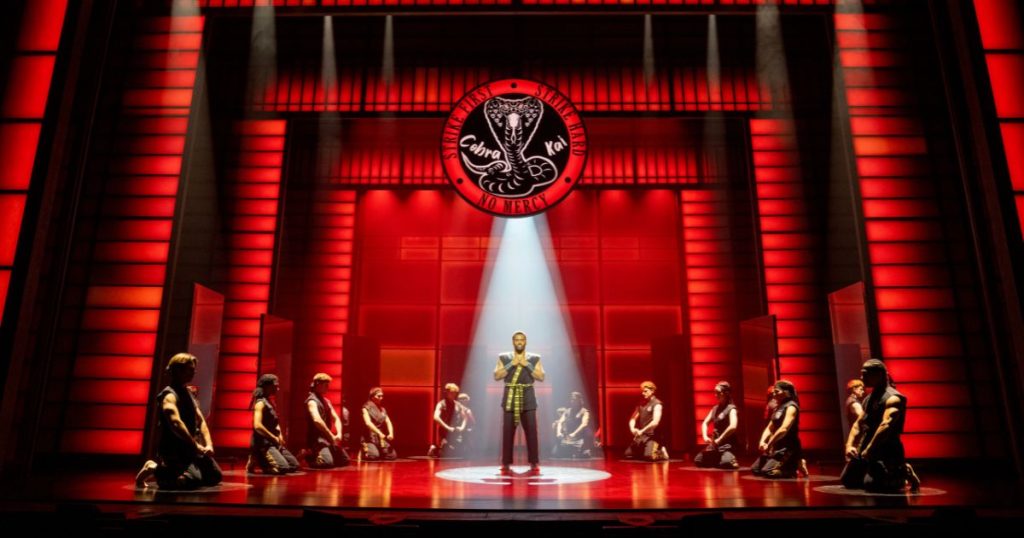
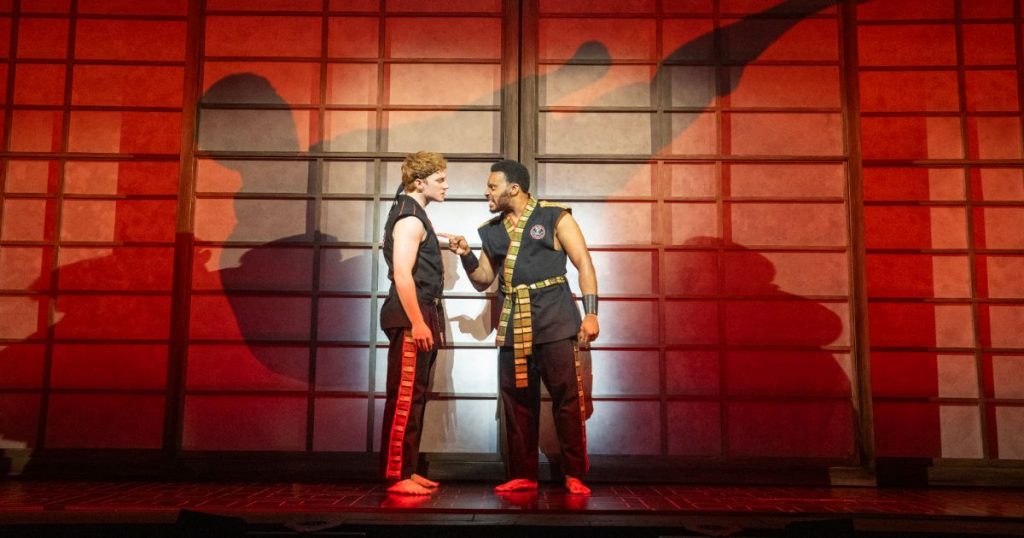
The production constantly pushes that contrast between aggression and calmness. The Cobra Kai dojo scenes, featuring Matt Mills (as John Kreese) and Joe Simmons (Johnny Lawrence), are drenched in aggressive red lighting and heavy shadows, feeling moments away from erupting into violence.
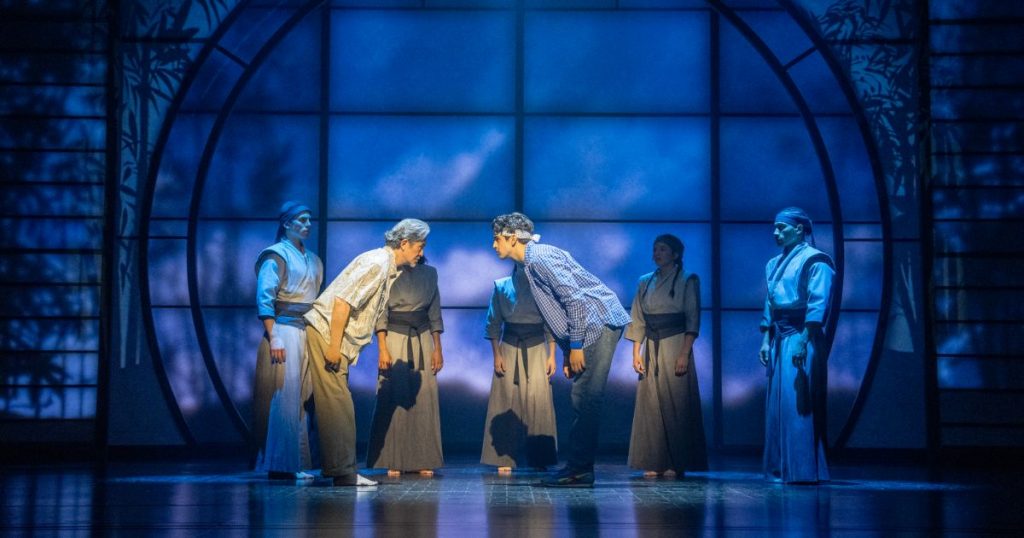
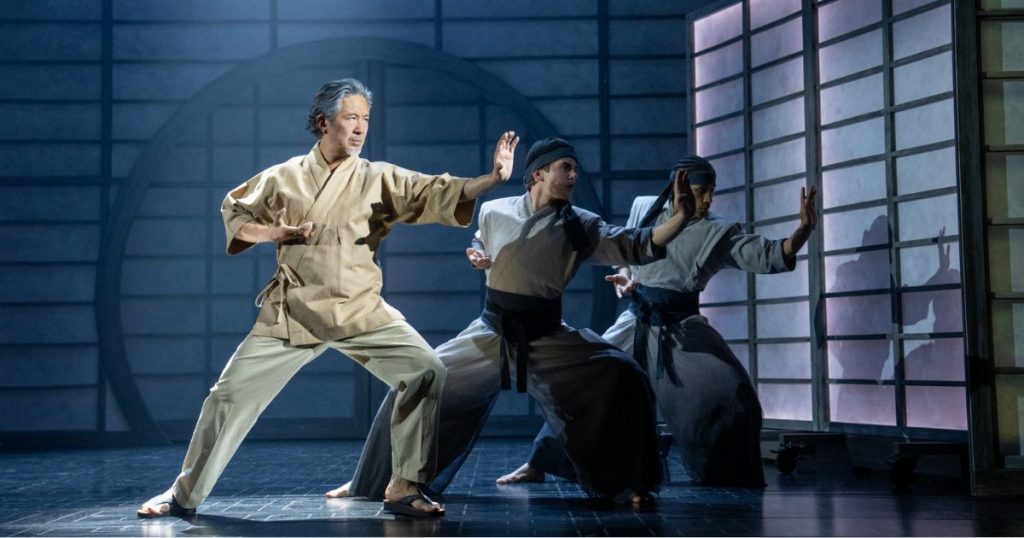
Then the atmosphere shifts entirely, with scenes featuring Adrian Pang (Mr Miyagi) and Gino Ochello (Daniel LaRusso), who slow the pace down with cooler blue tones, softer musical moments, and a calmness that resets the atmosphere each time they appear.
The projections and lighting do a huge amount of work throughout the evening, helping the show feel bigger while reinforcing the divide between rage and balance.
Adrian Pang steals the show
Adrian Pang completely excels as Mr Miyagi. Every time he walks on stage, the production suddenly relaxes into itself. He’s funny without forcing it, quietly heartbreaking when the story needs emotional weight, and carries a calm presence that makes the louder Cobra Kai moments land even harder by contrast.
Some of the quieter scenes surrounding Miyagi’s backstory unexpectedly become the emotional core of the show. The production spends so much time wrapped up in teenage rivalries, tournament pressure, and theatrical dojo drama that these smaller moments hit even harder when they arrive. Yet Pang still manages to weave perfectly timed humour and sarcasm throughout, keeping the audience fully engaged from start to finish.
His on-stage chemistry with Gino Ochello is equally strong, gradually building a friendship that feels genuinely heartfelt. As the story progresses, their relationship develops into something closer to a father-son bond, giving the production much of its warmth beneath the karate-fuelled chaos.
Matt Mills also works well as the intimidating John Kreese, bringing genuine intensity to the role. There were children near me physically gripping the edge of their seats whenever he appeared, which tells you everything you need to know about how effectively the show taps into that classic good-versus-evil dynamic.
As someone unfamiliar with the original film, the cheesiness of Johnny Lawrence’s introduction took slightly longer for me to fully buy into. Initially, the bully persona felt a little too exaggerated, but as the story progressed, both the rivalry and the character himself became much stronger.
Choreography, music and movement
The choreography often feels less like traditional musical theatre dance breaks and more like movement stitched directly into the karate itself. Rather than relying entirely on straightforward fight scenes, the production blends stylised movement and dance into many of the training sequences, particularly during Mr Miyagi’s demonstrations.
At times, it reminded me slightly of how Hamilton uses movement symbolically during ‘The Bullet’ sequence – less literal choreography and more emotional storytelling through motion. There were moments where it perhaps felt slightly overused, but I could still appreciate the creative vision behind it.
Musically, the score keeps the production moving at a pace that mirrors the film’s underdog energy, particularly once Cobra Kai fully enters the picture. Some of the more upbeat numbers involving Mills and Simmons inject the show with much-needed energy, while Ochello’s scenes alongside Sharon Sexton (Lucille LaRusso) bring warmth and sincerity to the story.
There were a few moments where certain songs felt as though they were building towards something bigger before pulling back slightly too early. A little more theatrical punch in places could have elevated the production from an enjoyable nostalgia trip to a full-scale crowd eruption.
A finale that wins the crowd
I did occasionally find myself wanting the karate sequences to land with slightly more impact, as it felt like they were playing it safe at times. However, the audience clearly loved the final showdown. By the tournament scene, the Palace Theatre had transformed into something closer to a football crowd than a traditional theatre audience, with audience members shouting, cheering, and reacting towards the stage like they were watching a real sporting event.
Nostalgia is undeniably one of the show’s biggest selling points, but I think newcomers will enjoy it too – particularly younger audiences discovering the story for the first time. It may not hit every emotional beat perfectly, and some of the cheesier moments will definitely depend on your tolerance for intense 1980s sincerity, but the production embraces that tone so wholeheartedly that resisting it almost feels pointless.
By the curtain call, the atmosphere inside the theatre felt less like polite musical applause and more like a crowd celebrating a victory. And, for a story built around balance and believing in yourself, that feels strangely fitting.
Karate Kid The Musical is running at Manchester’s Palace Theatre until 23 May. Book your tickets now.
*Gifted tickets in exchange for an honest review.
Kelsey Haslam is the founding editor of Magenta Adventures Travel Publication and a freelance travel writer with a focus on community-based travel, culture-led experiences, and theatre tourism. She is passionate about spotlighting lesser-known destinations and connecting travellers with meaningful, human-centred stories.
Her published work includes destination features and luxury hotel reviews for leading travel outlets such as A Luxury Travel Blog, Beau Monde Traveler, and Luxury Lifestyle Magazine.
Explore more about Kelsey’s background on the About Page.