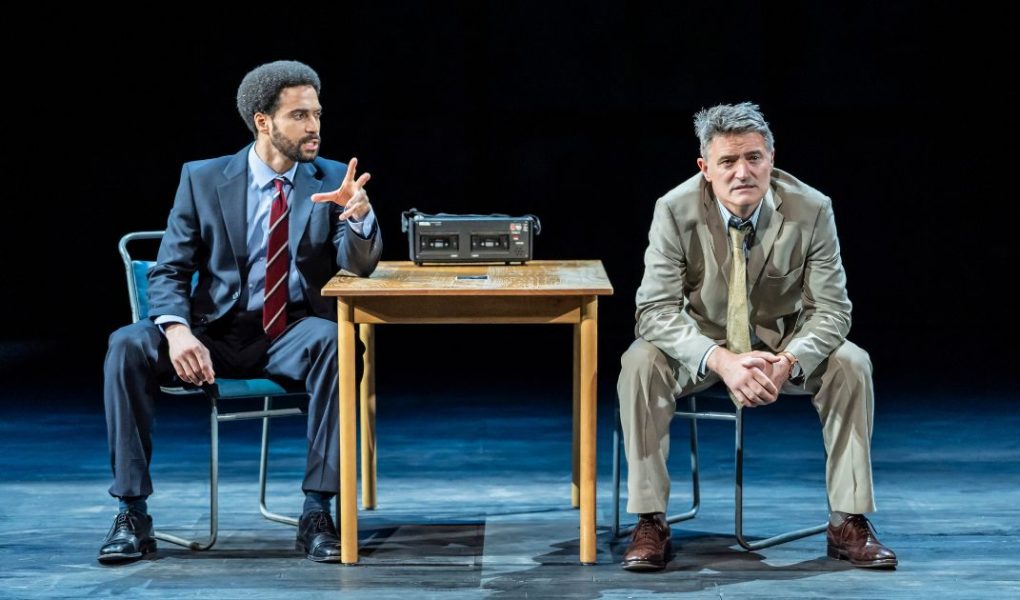
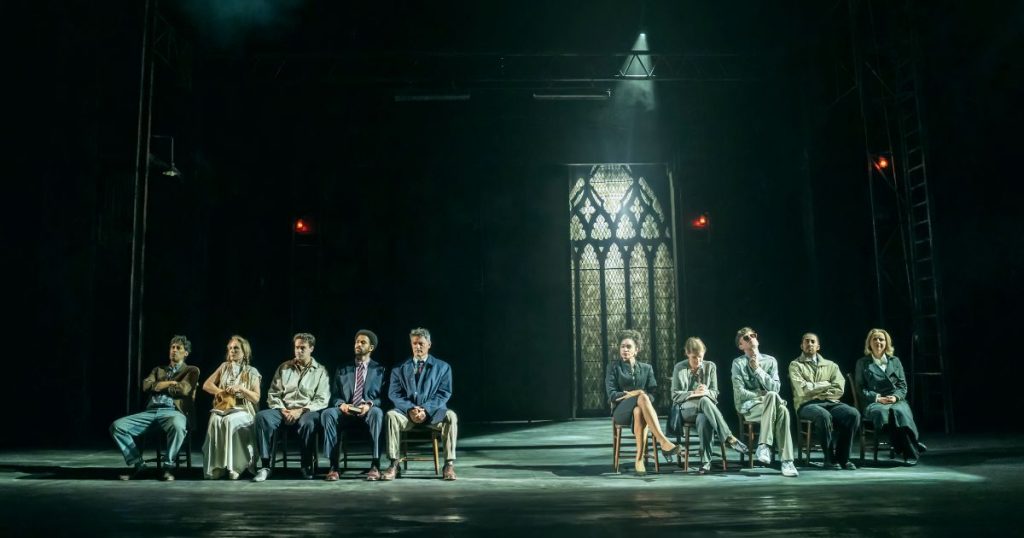
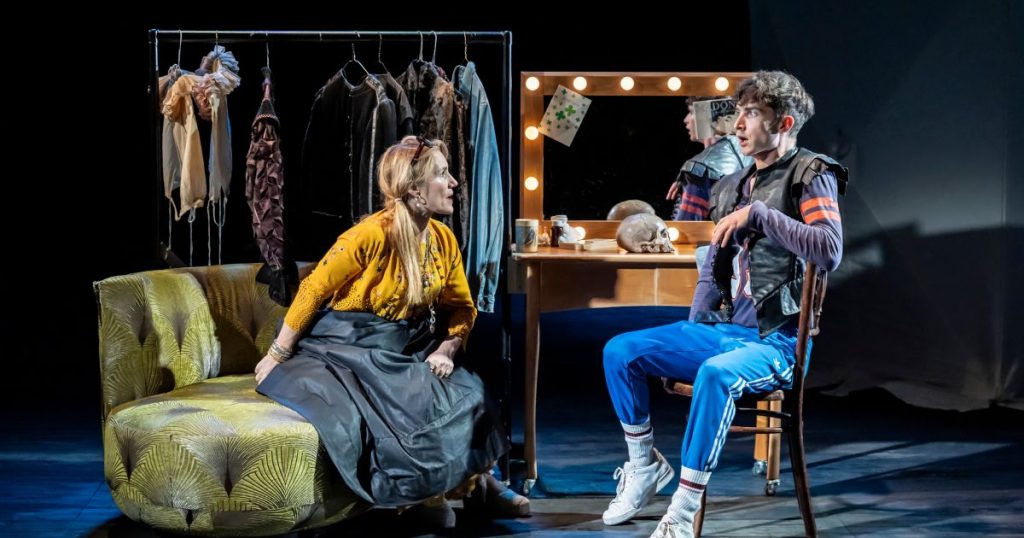
Inspector Morse House of Ghosts - Credit_ Johan Persson

Theatre Review: Inspector Morse: House of Ghosts at The Lowry

Growing up in Salford, a visit to the Lowry has always felt familiar. Sitting on the edge of the Quays, it’s a place that feels both cultural and personal. So, it feels only fitting that the iconic Inspector Morse arrives here in its first-ever stage adaptation, Inspector Morse: House of Ghosts – a production steeped in nostalgia for many audiences.

The play opens with a short performance of Hamlet, complete with a haunting voice that echoes from the theatre stalls, before a death occurs on stage – positioning the audience as part of the theatrical world itself. It’s an engaging starting point that immediately blurs the line between performance and reality.

Charlotte Randle’s Verity cries out for help as the house lights come up, while Tom Chambers’ Inspector Morse marches through the stalls, pulling the audience directly into the action. This sense of drama is heightened by Jason Done as Lawrence, shouting from the circle as the characters panic and attempt to process the tragedy unfolding before them.

Moments like this hint at a production that understands the immersive potential of theatre. This, alongside the creative use of lighting, taps into exactly the kind of theatricality I personally love when watching a live performance. These elements appear in glimpses throughout the show, offering a sense of what the production could have been if that energy had been sustained.

Performances that stand out

While the production may miss a few marks, Jason Done as Lawrence is a clear standout. His portrayal leans into the eccentricities of the character, who is bold, controversial, and unapologetically larger-than-life. Done injects much-needed energy into the production throughout, with occasional comedic one-liners and erratic behaviour. His performance delivers some of the few moments where a character feels fully realised.

Charlotte Randle’s Verity also offers moments of light relief, particularly as her character begins to let loose. There’s a sense of personality and presence that helps lift a few of the scenes she’s in, even against the slower pace of the wider narrative.

Spin Glancy brings a more subtle humour to Justin, with expressive mannerisms and physicality creating moments of levity that land well with the audience.

Inspector Morse House of Ghosts - Credit_ Johan Persson (3)

At times, however, the cast performances lean heavily into heightened delivery, with moments of shouting and exaggeration that feel overplayed. This occasionally disrupts the natural rhythm of the piece, making it harder to fully connect with the characters.

Given the strength of the cast’s previous work, this feels less like an issue of performance and more a reflection of the direction and scripting, which don’t always allow the characters the space to develop with clarity.

A story that struggles to build momentum

Unfortunately, House of Ghosts feels less effective in its pacing and narrative development.

As a mystery, the play relies heavily on audience investment in both its characters and the unfolding story. However, the notably slow pace makes it difficult to maintain that engagement throughout. Certain scenes feel prolonged, while others, including key moments that could carry emotional weight,  pass too quickly to leave a lasting impact.

This imbalance is evident early on with Rebecca’s death, where there’s little opportunity for the audience to form a meaningful connection with her character. Introducing elements such as flashbacks may have helped strengthen that emotional investment. As it stands, Eliza Teale’s presence feels limited, particularly as she is not really reintroduced in other roles – something that also feels unusual for a production of this style.

Inspector Morse House of Ghosts - Credit_ Johan Persson (2)

Combined with moments of heightened delivery that occasionally feel excessive, the pacing further impacts the overall tension of the piece. Without a consistent sense of build or escalation, the central mystery lacks the urgency and intrigue that the premise promises. As a result, it becomes difficult to fully engage with the story or feel invested in its outcome.

Missed opportunities in storytelling

What stands out most is the sense of untapped potential. The world of Inspector Morse feels rich with possibilities – from deeper character exploration to more inventive staging choices.

Moments of immersion, such as characters interacting within the auditorium space, hint at a more dynamic production style that could have been explored further. Similarly, the use of lighting and sound demonstrates how effectively atmosphere can be created, making it all the more noticeable when that energy isn’t sustained throughout.

There’s a feeling that, with a tighter script and more consistent pacing, the production could have delivered a far more compelling theatrical experience.

Final thoughts

Inspector Morse: House of Ghosts is an ambitious adaptation that introduces a well-loved character to the stage for the first time. While there are moments of strong performance and creative staging, the production ultimately struggles to maintain the tension and engagement that a story of this genre relies on.

Audiences already invested in the world of Inspector Morse will appreciate some of the classic tropes and nostalgic feel that the production brings. For others, it may feel like a production that doesn’t quite reach its full potential and falls short compared to other productions at The Lowry.

That said, the foundations are there, and with refinement, this is a story that could translate far more effectively to the stage.

Inspector Morse – House of Ghosts is running at the Lowry Theatre until 11 April. Book your tickets now.

**Tickets gifted in exchange for an honest review

Subscribe to Magenta Adventures

Sign up to receive email updates when we post new content. We really appreciate it!

We promise we don’t spam!

Kelsey Haslam

Kelsey Haslam is the founding editor of Magenta Adventures Travel Publication and a freelance travel writer with a focus on community-based travel, culture-led experiences, and theatre tourism. She is passionate about spotlighting lesser-known destinations and connecting travellers with meaningful, human-centred stories.

Her published work includes destination features and luxury hotel reviews for leading travel outlets such as A Luxury Travel Blog, Beau Monde Traveler, and Luxury Lifestyle Magazine.

Explore more about Kelsey’s background on the About Page.

You may also like...