
Theatre Review: Double Indemnity at the Manchester Opera House

There’s already a version of Double Indemnity that most people picture – sharp, shadowy, and built on slow-burning tension. Bringing that into a theatre like the Manchester Opera House comes with a certain expectation of how that atmosphere will translate.

This production leans into those noir elements through tone rather than scale. It doesn’t try to recreate the world in full detail, instead relying on performance and suggestion – which works, though not always consistently. Overall, it’s a production that takes a little time to settle, but finds its footing as it goes.

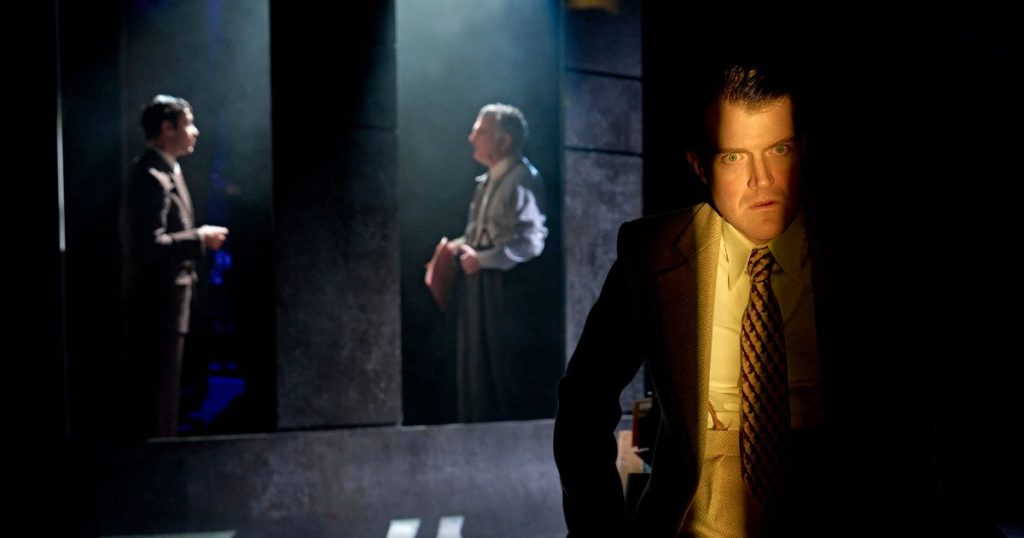
The narrative is driven by Walter Huff, played by Ciaran Owens, who guides the audience through events with a conversational ease. His delivery is direct, often breaking the fourth wall in a way that keeps the audience involved rather than held at a distance.

There’s a self-awareness to his performance that adds a layer of humour to an otherwise dark story. Moments where he plays directly to the audience, such as suggesting that any sympathy towards him says more about us than it does about him, land particularly well.

Owens ends up carrying much of the production’s energy. Even in slower moments, his presence keeps things moving, giving the story a clarity that might otherwise feel lost.

Ciaran Owens (Walter Huff) - Credit - Manuel Harlan

Casting, chemistry, and where it falls short

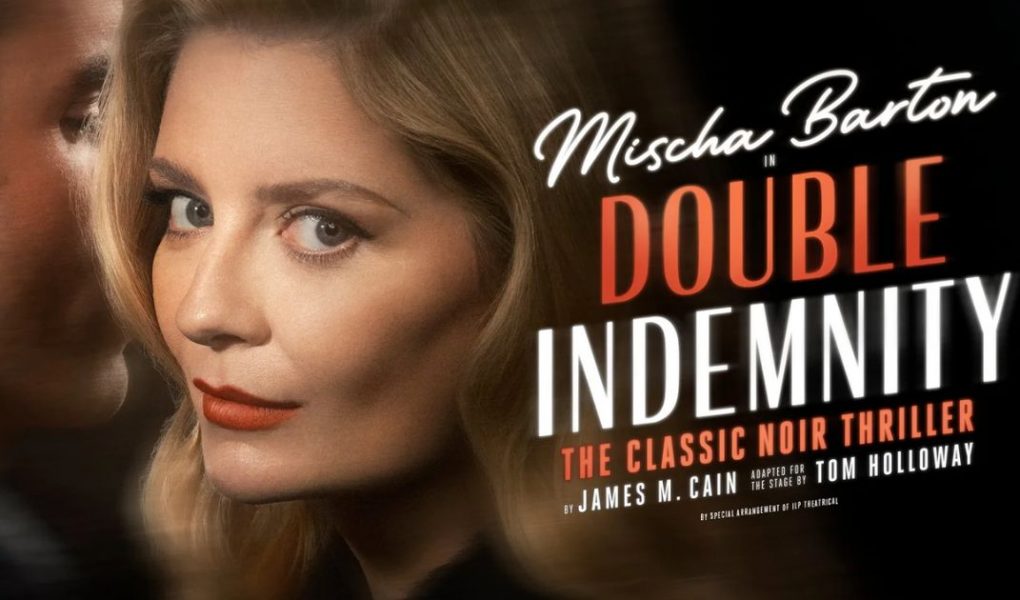
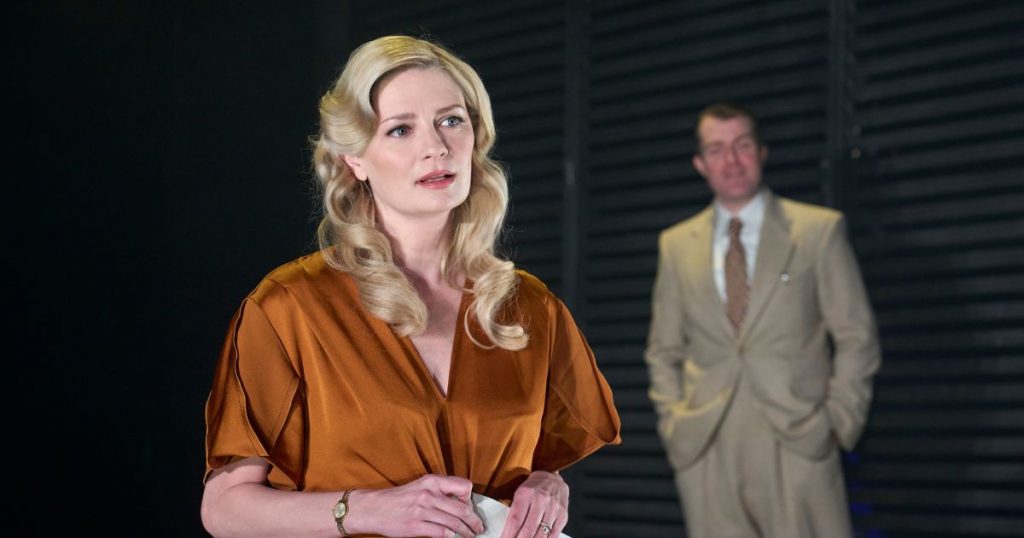
At the centre of the story is Mischa Barton as Phyllis Nirdlinger – a role that should feel as dangerous as it is glamorous. Barton undoubtedly looks the part, and there’s a composed confidence in her performance that fits the world of noir.

However, the character never fully leans into the seduction the story depends on. The dynamic between Phyllis and Walter lacks that sense of manipulation and tension, which makes their relationship feel more immediate than convincing. When Walter agrees to the central crime, it happens quickly and without any real build-up. Because of that, the chemistry between them doesn’t quite land in the way you might expect from such a defining pairing. It’s difficult not to feel that this is where the production loses some of its edge.

That said, there are lighter moments that cut through. Characters like Nino (Joseph Langdon) bring welcome touches of humour, helping to shift the tone where needed.

Mischa Barton (Phyllis Nirdlinger) - Credit - Manuel Harlan

While the key relationship lacks chemistry, the dynamic between Huff and Keyes is a pleasure to watch. Huff believes he’s in control of his ‘perfect murder,’ and yet in doing so, he underestimates how Keyes taught him everything he knows. That dynamic adds a layer of irony to the story, and it’s one of the most satisfying elements as the production reaches its conclusion.

The second act introduces a noticeable lift, largely thanks to Martin Marquez as Keyes. His performance is sharp, well-timed, and genuinely funny, bringing a different rhythm to the stage. The interplay between Keyes, Huff, and Langdon’s Mr Norton becomes one of the most engaging aspects of the show, with a pace and energy that feels more settled.

Minimal staging, maximum atmosphere

Visually, the production is at its strongest when it keeps things simple. However, there are moments where that simplicity edges towards feeling slightly repetitive.

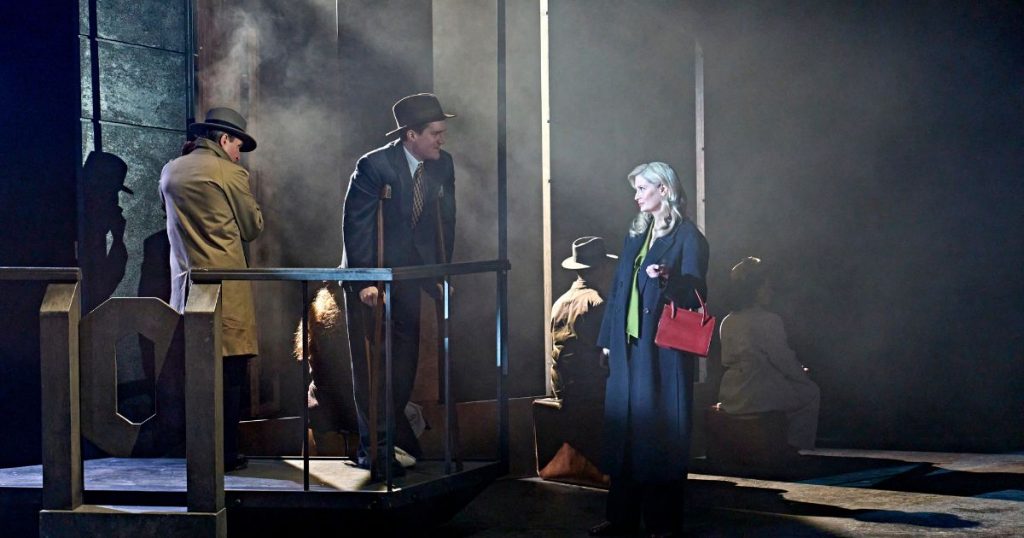
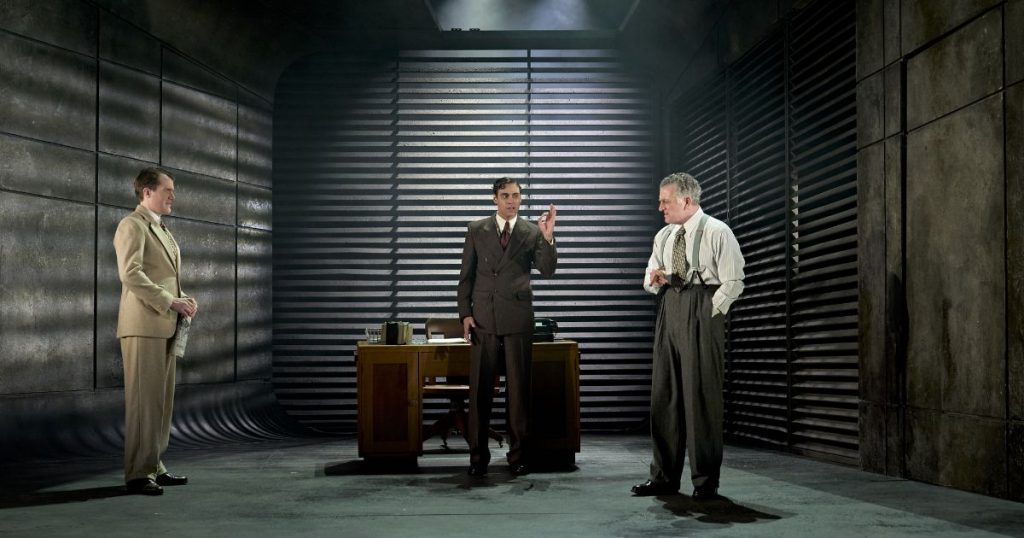
The lighting design does much of the heavy lifting, using contrast and shadow to define each scene. It’s minimal, but intentionally so – echoing the aesthetic of classic noir without feeling stripped back for the sake of it.

In many ways, the lighting becomes the set. It shapes the environment and signals shifts in location without the need for elaborate staging. When it works, it’s incredibly effective.

There are moments, however, where that minimalism slightly works against the production. A few transitions take a second to register, and it’s only through lighting and sound that the setting becomes clear. Without that support, those moments might feel more disconnected.

Ciaran Owens (Walter Huff) and Mischa Barton (Phyllis Nirdlinger) - Credit - Manuel Harlan

A stronger second act and a full-circle payoff

The first act feels like it’s still finding its rhythm. It sets everything in motion, but doesn’t fully commit to the tension or pacing that the story needs early on, particularly in the central relationship.

By contrast, the second act feels far more assured. The dialogue sharpens, the humour lands more confidently, and the performances begin to click into place. It’s where the production becomes most engaging.

There’s also a clear thematic thread around the idea of a ‘perfect murder’ – something that requires help, everything planned in advance, and a certain level of audacity. By the time the twist unfolds, that idea comes full circle, which is particularly satisfying to watch.

Ciaran Owens (Walter Huff), Joseph Langdon (Mr Norton) and Martin Marquez (Keyes) - Credit - Manuel Harlan

Final thoughts

Without giving anything away, the ending lands well. It offers a slightly different take that still feels true to the story, while giving the audience a sense of closure that’s been carefully built towards.

This isn’t a flawless production, and it doesn’t always reach the level of tension that the genre is known for – particularly in its central dynamic. But it builds into something far more engaging as it goes, with a second act that brings clarity, humour, and a stronger sense of direction.

If you’re drawn to the style of noir, and open to seeing it interpreted in a more minimal, stage-led way, Double Indemnity at Manchester Opera House is worth the visit, especially for the way it comes together in the end.

Double Indemnity is running at Opera House, Manchester until 2 May. Book your tickets now.

**Tickets gifted in exchange for an honest review.

Subscribe to Magenta Adventures

Sign up to receive email updates when we post new content. We really appreciate it!

We promise we don’t spam!

Kelsey Haslam

Kelsey Haslam is the founding editor of Magenta Adventures Travel Publication and a freelance travel writer with a focus on community-based travel, culture-led experiences, and theatre tourism. She is passionate about spotlighting lesser-known destinations and connecting travellers with meaningful, human-centred stories.

Her published work includes destination features and luxury hotel reviews for leading travel outlets such as A Luxury Travel Blog, Beau Monde Traveler, and Luxury Lifestyle Magazine.

Explore more about Kelsey’s background on the About Page.

You may also like...