The Tunisian Santorini: A beautiful gem, Sidi Bou Said

Nestled on the Mediterranean coast, Sidi Bou Said is one of Tunisia’s most picturesque destinations – a stunning blue-and-white village often called the “Tunisian Santorini”. Known for its artistic atmosphere, Moorish architecture and sweeping sea views, this charming hilltop town is one of the best places to visit near Tunis. Whether you’re a culture lover, photographer or slow traveller, this Sidi Bou Said travel guide will help you discover the best things to do, where to eat, and how to plan your visit.

I visited Sidi Bou Said during my trip to Tunisia and was instantly captivated by its artistic energy and striking blue-and-white palette. This small, hidden haven is a true jewel of Tunisia, which offers a perfect blend of history, culture and coastal views. 

The best time to visit Sidi Bou Said is from March to June or September to November, when temperatures are warm but comfortable. Summer can be very hot and crowded, while winter offers quieter streets and cooler weather. Sunrise and late afternoon are the best times for photography, with softer light on the iconic blue-and-white buildings.

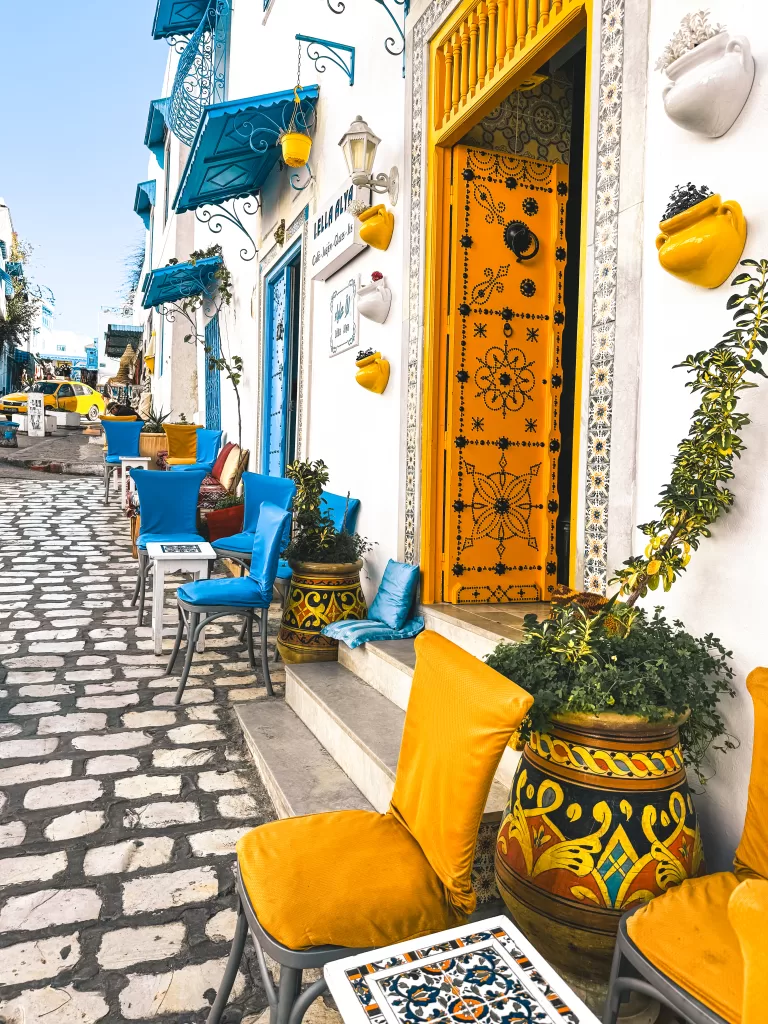
A colourful street featuring blue and yellow Tunisian doors, architecture and geometric patterns with yellow and boot seating outside of a cafe

Why Sidi Bou Said is known as the ‘Tunisian Santorini’

Sidi Bou Said is often described as the ‘Tunisian Santorini,’ and it’s clear to see why. Santorini is a bucket list destination for many who look to admire and photograph beautiful landscapes painted in crisp white and alluring blues. However, it’s no secret that a well-known destination like Santorini can often come with a high price tag. 

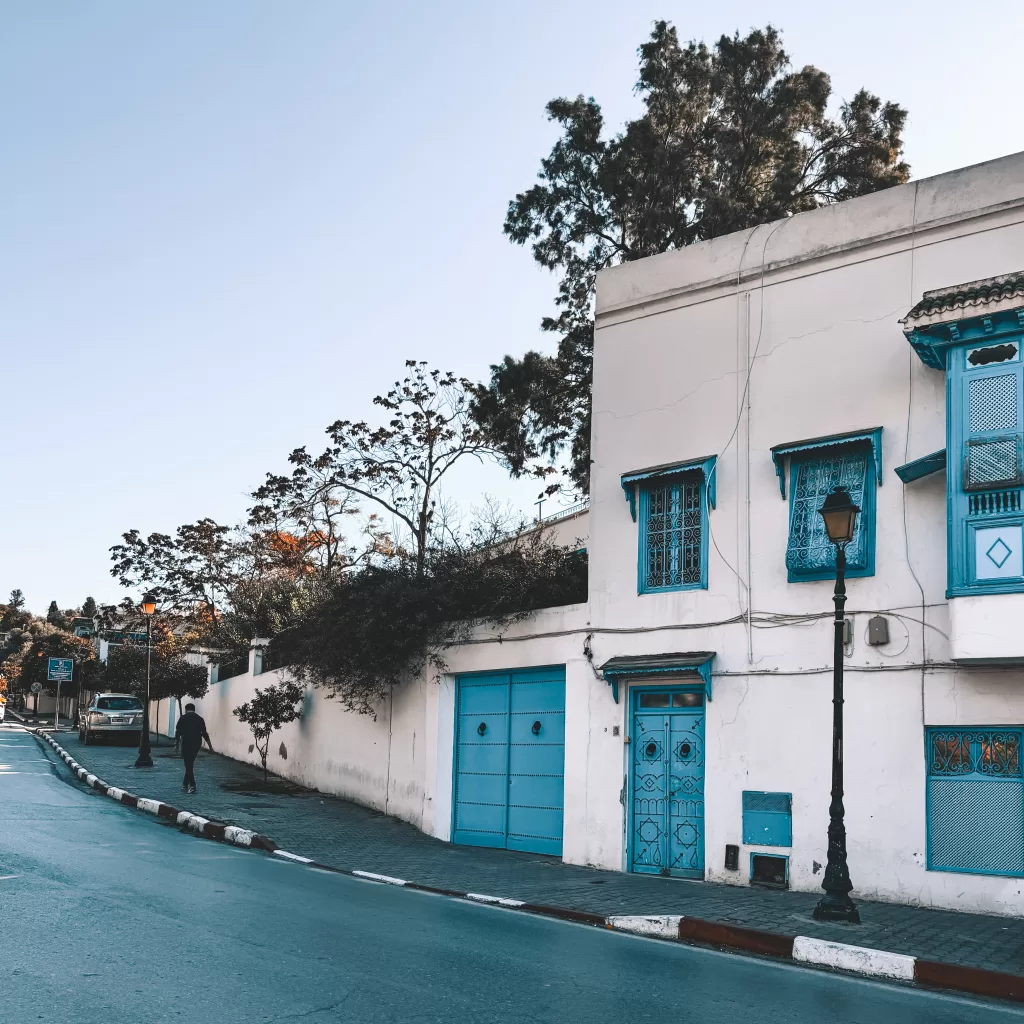
A Sidi Bou Said street with a white building and turquoise blue window frames and doors

When visiting Sidi Bou Said, be prepared to be mesmerised by the striking colour palette that adorns every corner and the Tunisian cultural charm that can be found within the architecture. Whitewashed walls embellished with bold blue or yellow doors and window frames create a sense of harmony as though you’ve entered a dreamlike world straight out of an artist’s imagination. 

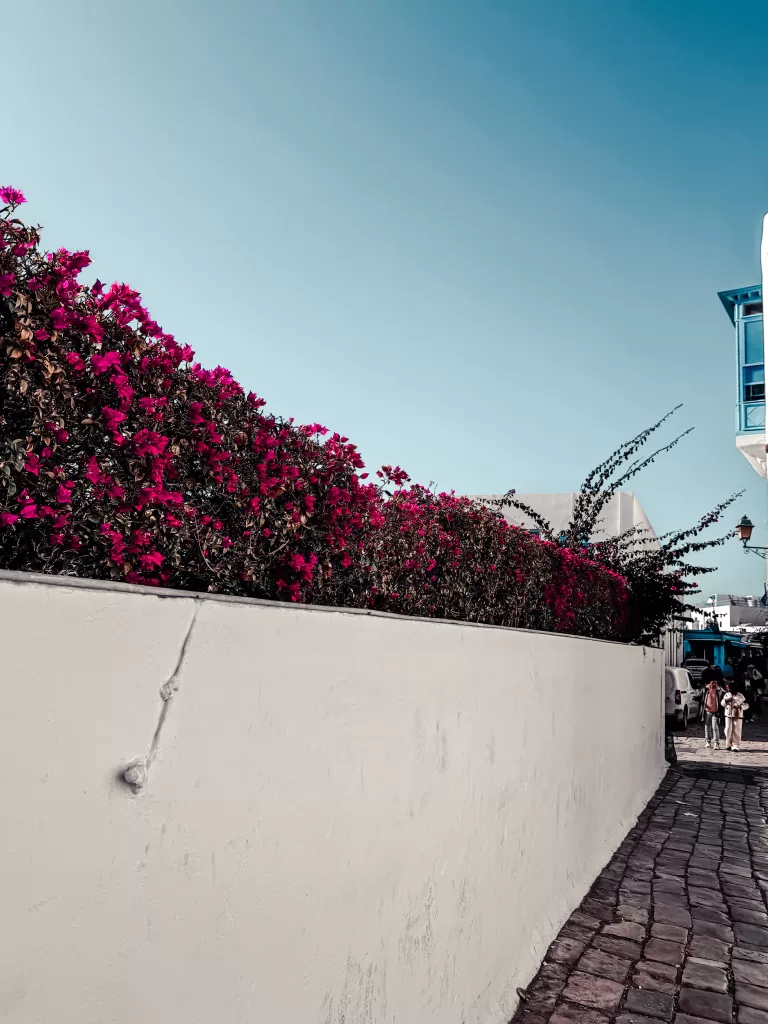
For an additional pop of colour, spot the many quaint orange trees that grow along the streets, as well as the vibrant bougainvillaea flowers that hang over the walls, adding the perfect splash of magenta across the cobbled town.

Tunisian doors, architecture & cultural heritage

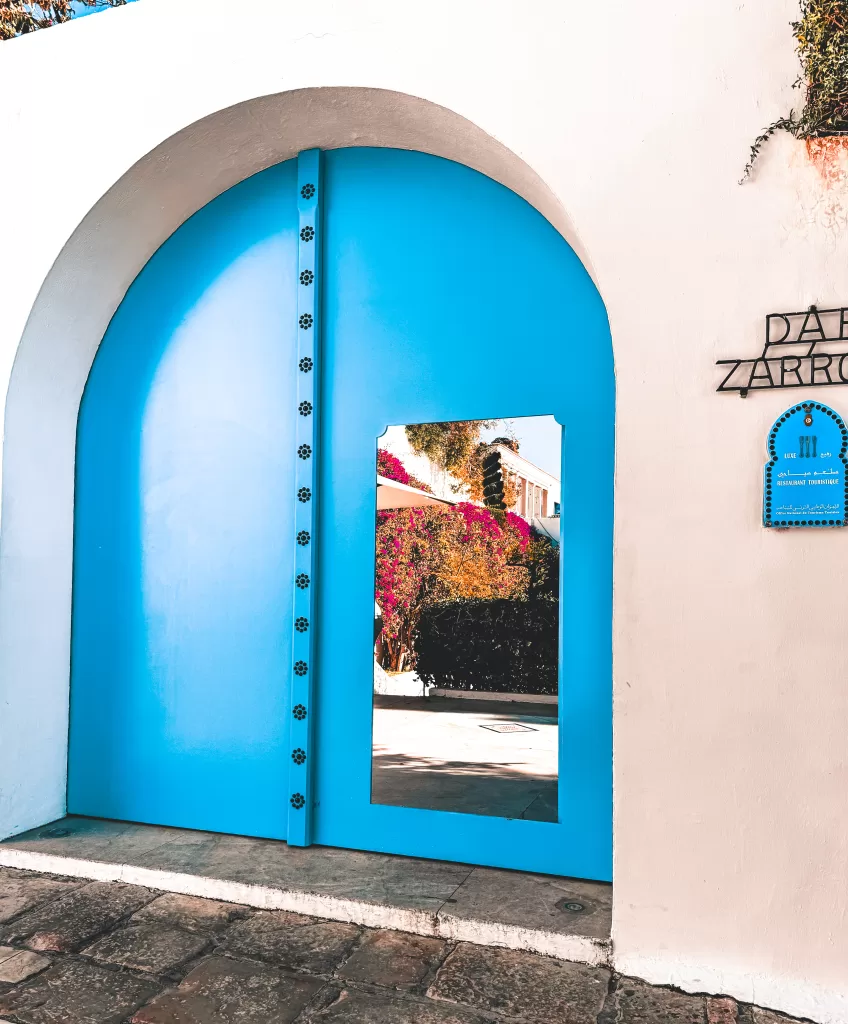
While the picturesque town is akin to a Greek landscape, you’ll find the unique Tunisian charm that makes Sidi Bou Said so unique. Most of the architecture features the traditional Tunisian door, which holds cultural significance and is considered to be an important aspect of the country’s architectural heritage. 

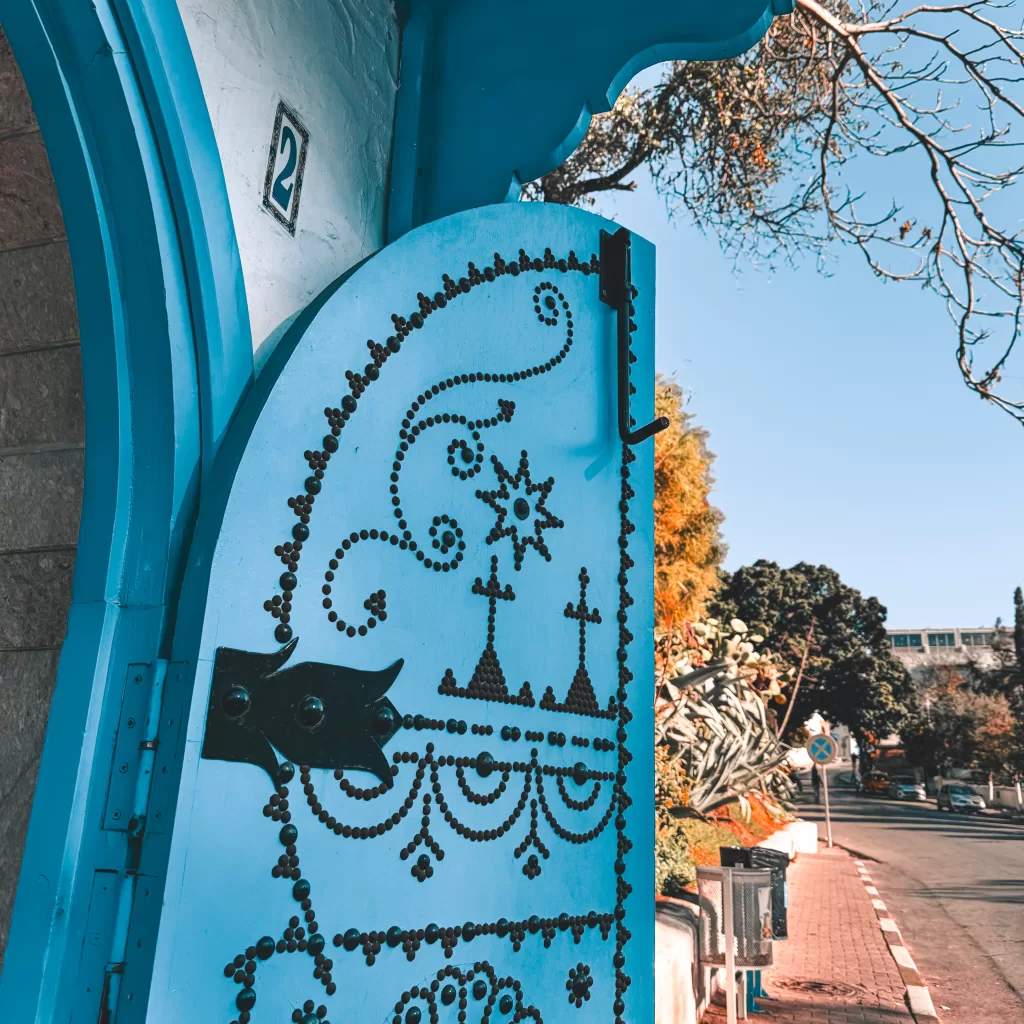
The doors in Tunisia are beautiful in their own right, featuring intricate designs and representing the rich artistic values within the country. This artistic flair is said to also exhibit elements of Islamic design and architecture, so expect to see geometric patterns, shapes and impressive craftsmanship throughout the town, and the country as a whole.

a blue Tunisian door in Sidi Bou Said, Tunisia with black geometric patterns

The predominant blue tones found across the town of Sidi Bou Said are known to represent protection from evil in Tunisia, as well as helping to keep homes cool in hotter climates. Another reason is that the colour blue is said to deter insects and mosquitos from entering homes, cafes and restaurants due to its water-like appearance. However, you’ll also find complimentary vibrant colours such as yellows. 

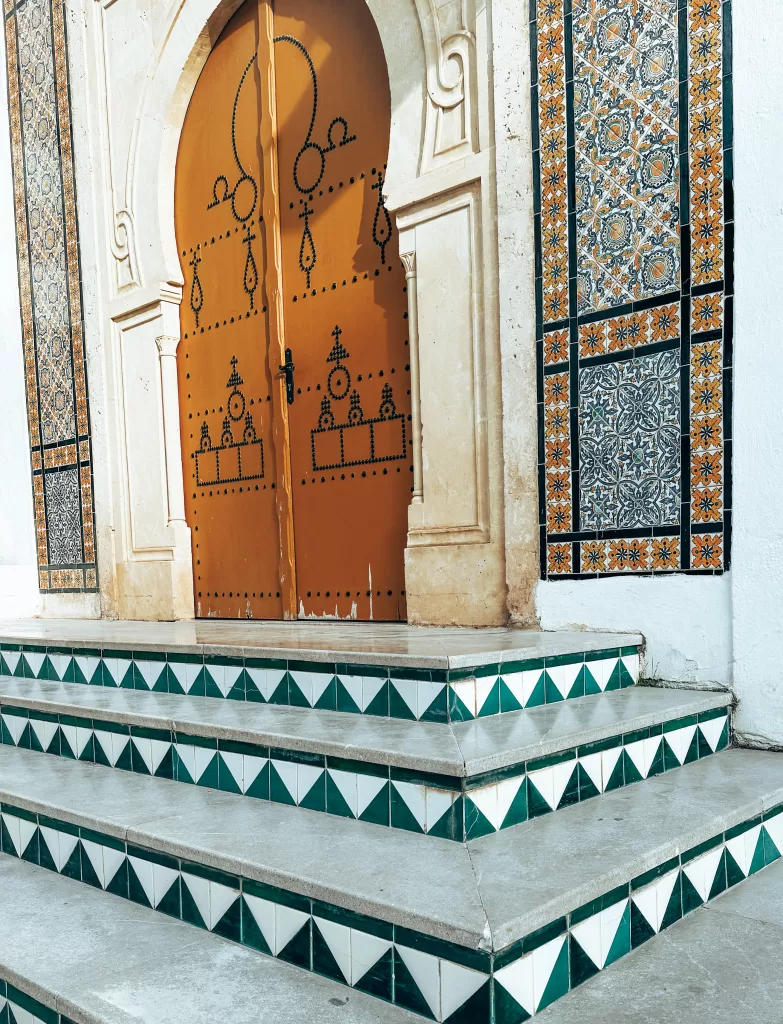
A yellow/mustard coloured Tunisian door in Sidi Bou Said with black geometric patterns. Further abstract style artwork are on the walls next to the door while geometric patterns are on the short staircase leading to the door

The significant Tunisian doors serve as a testament to Tunisia’s rich heritage, as well as offering an insight into the architectural and cultural identity of Tunisians. Therefore, when visiting Sidi Bou Said, remember to take a moment to embrace the beautiful talent represented in each door.

Best cafés in Sidi Bou Said

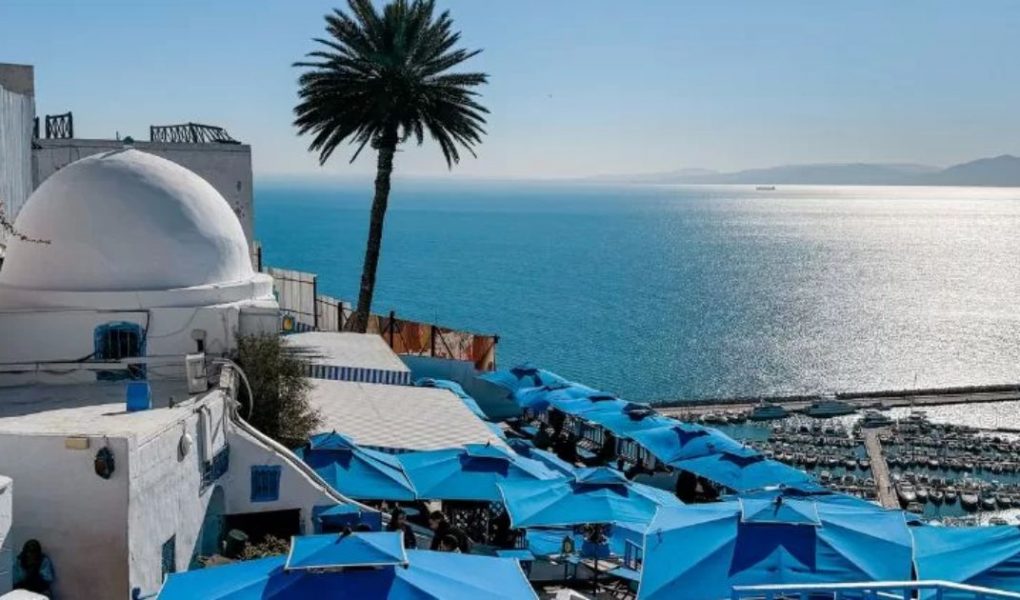
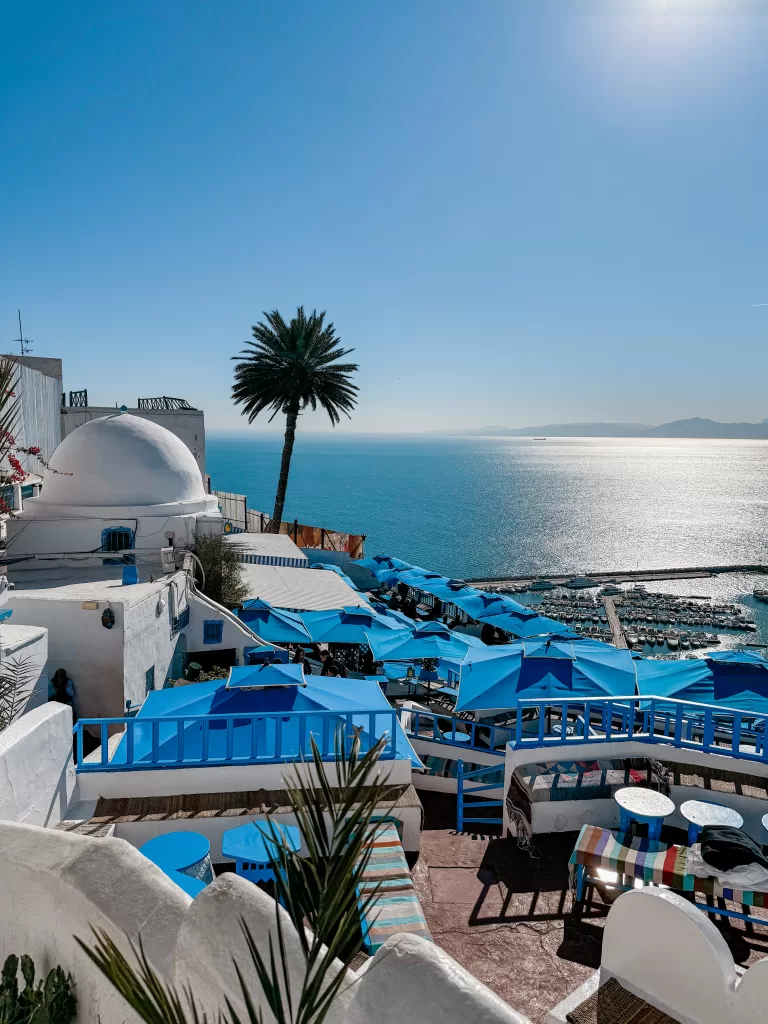
Featuring panoramic views of the harbour, bold umbrellas and colourful seating, Café des Délices is the perfect location to refresh, have a bite to eat and soak in the euphoria of Sidi Bou Said.

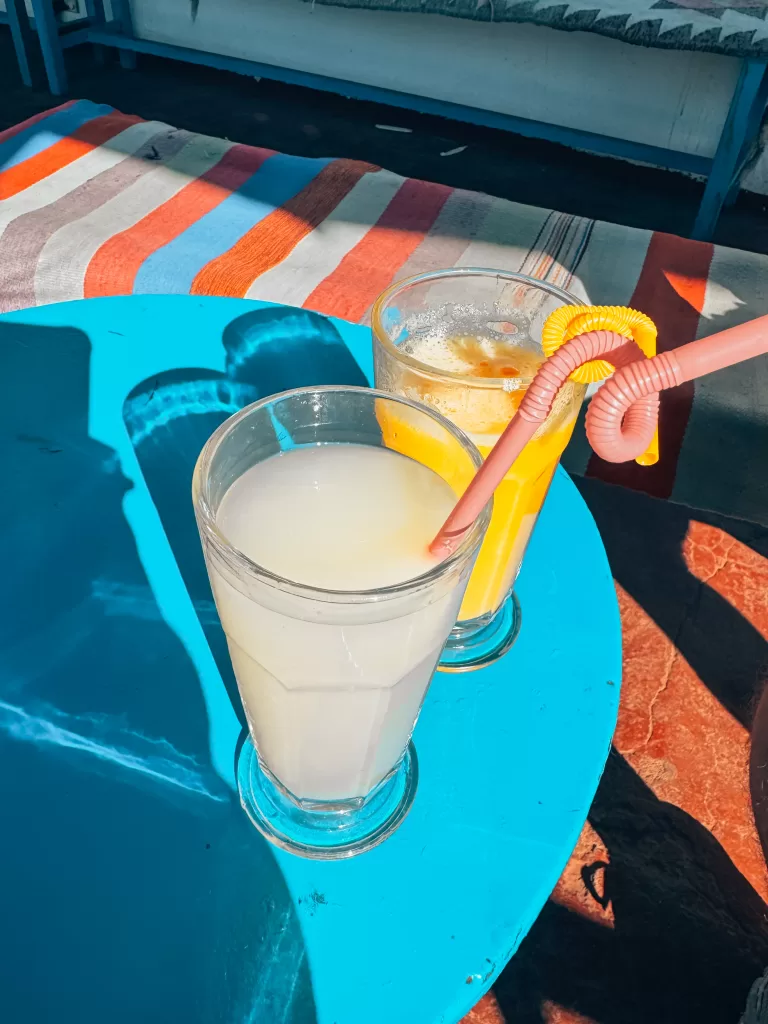
The popular cafe can get busy in the hotter months; the team aims to accompany anyone who visits due to its spacious, open-air layout. Highlights include the fresh orange juice, which is a perfect addition after admiring the stunning orange trees within the town. Alternatively, try some Tunisian mint tea where the aroma will take you on a sensory journey through Tunsian’s culture.

Aside from Café des Délices, there are plenty of other cafes and restaurants around Sidi Bou Said, so you’re sure to find a scenic place to unwind before you continue your exploring. However, when visiting, remember to ask for the prices before you order. There have been some negative reviews regarding price increases for tourists.

Shopping in Sidi Bou Said: souvenirs and local crafts

Sidi Bou Said has been an inspiration for artists, poets and writers in Tunisia and beyond. You can see this while walking around the enchanting town, and there are several souvenir shops where you can take a little bit of the Sidi Bou Said charm home with you.

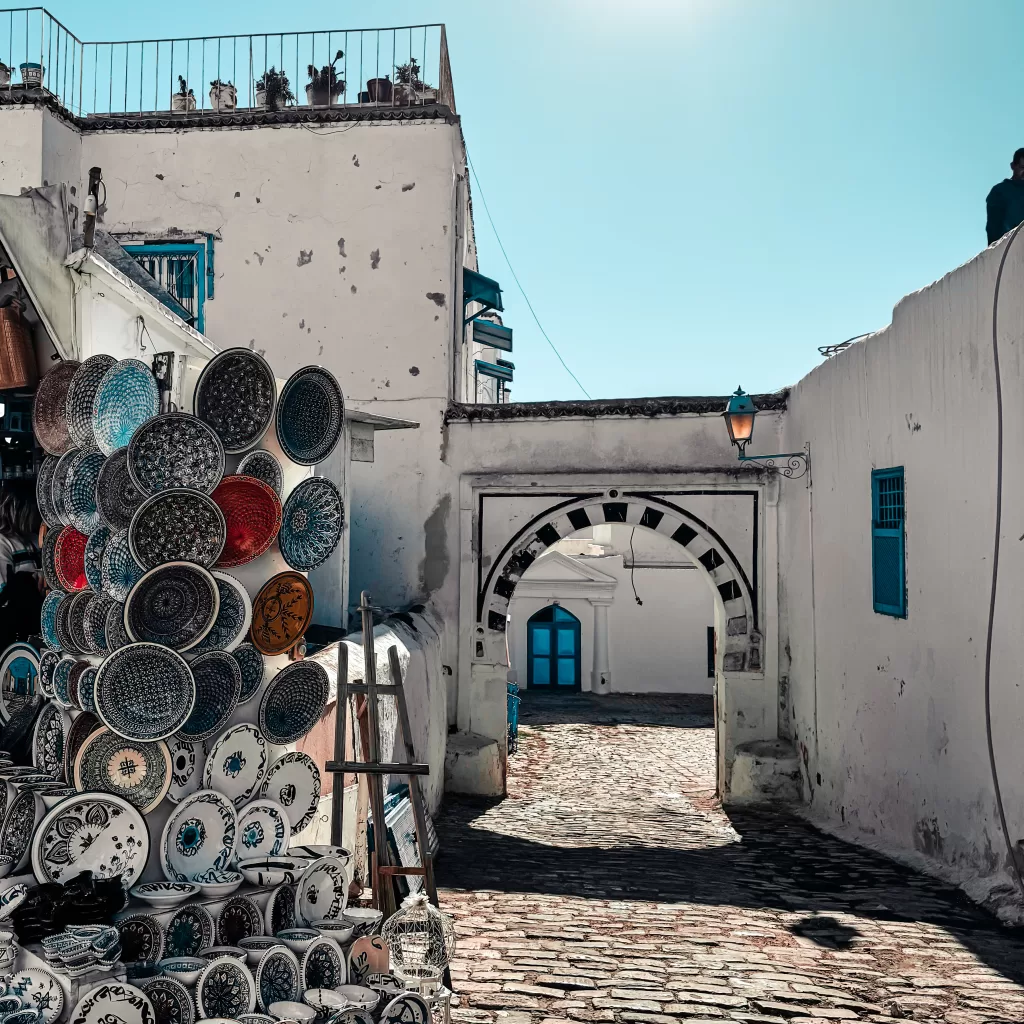
A white and blue street in Tunisian Santroini, Sidi Bou Said with ceramic artwork

You’ll find handcrafted mosaics, Tunisian doors, hand-painted artwork inspired by the architecture, ceramics, and many more gifts. Souvenir stores may feature fixed-priced items, or you may need to haggle with the owners if you’re looking to make a purchase – this is very, very popular in the tourist destinations so ensure that you’re not being taken advantage of if you do decide to haggle. 

How long do you need in Sidi Bou Said?

You can explore the highlights of Sidi Bou Said in 2–4 hours, but many visitors spend half a day enjoying cafés, shopping and photography spots. If you’re combining it with a trip to Tunis, Carthage or La Marsa, plan a full day for a relaxed itinerary.

How to get to Sidi Bou Said from Tunis, Hammamet or Sousse

When travelling to Tunisia, you’ll likely find guided trips available to visit Sidi Bou Said. However, if you’re seeking the freedom to visit the town without a guide or group, you can visit via a taxi.

Although this may be a pricier trip, the driver will usually take you and pick you up – and if you’re lucky, they’ll tell you more about the cultural significance and history of the town.

The drive is around two hours from Sousse, slightly over an hour from Hammamet, and just 20 minutes from the capital, Tunis. 

Is Sidi Bou Said worth visiting? Final tips

Known as the Tunisian Santorini, the enchanting city of Sidi Bou Said holds its own, unique charm and cultural heritage which is all the more reason to visit. Immerse yourself in the architecture, walk around the cobbled streets, admire the breathtaking landscapes and art, and capture your memories with some stunning photographs – this lesser-known Tunisian gem promises a truly unforgettable experience.

Sidi Bou Said: FAQs

Is Sidi Bou Said safe?
Yes, Sidi Bou Said is considered safe for tourists and is one of Tunisia’s most visited destinations. As with any tourist area, keep an eye on your belongings in busy streets.

How far is Sidi Bou Said from Tunis?
It’s around 20 minutes by taxi from central Tunis or 15 minutes from Carthage.

If you’re staying in areas like Hammamet (around an hour’s drive) and Sousse (almost two hour drive) but completely worth going out of your way.

Do you need a guide to visit Sidi Bou Said?
No, it’s very easy to explore independently. A guide is optional if you want more historical context.

Is Sidi Bou Said expensive?
As with many tourist spots, you can expect cafés to be pricier. However, compared to hot spots in Europe, it’s definitely not as steep. Always check prices before ordering.

Subscribe to Magenta Adventures

Sign up to receive email updates when we post new content. We really appreciate it!

We promise we don’t spam!

Kelsey Haslam

Kelsey Haslam is the founding editor of Magenta Adventures Travel Publication and a freelance travel writer with a focus on community-based travel, culture-led experiences, and theatre tourism. She is passionate about spotlighting lesser-known destinations and connecting travellers with meaningful, human-centred stories.

Her published work includes destination features and luxury hotel reviews for leading travel outlets such as A Luxury Travel Blog, Beau Monde Traveler, and Luxury Lifestyle Magazine.

Explore more about Kelsey’s background on the About Page.

You may also like...